-

-
-
Loading
Loading

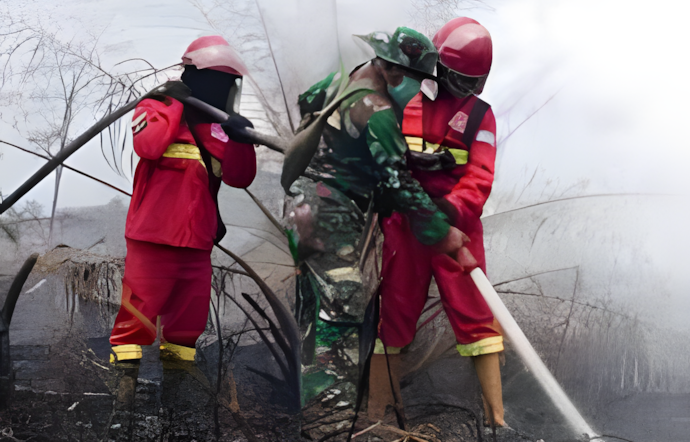
The initiation of a class-action lawsuit by civil society elements at the Pontianak State Court marks a new chapter in the dynamics of disaster governance in Indonesia. Emerging public discourse tends to frame this legal action dichotomously: as a reflection of systemic executive failure on one hand, or as the dynamics of civil resistance on the other. However, the perspectives of constitutional law and strategic public policy demand a more fundamental reading---dissecting how the pillars of the judiciary and the rationality of state instruments operate simultaneously amid a global ecological threat.
I. Institutionalizing the Citizen Lawsuit as a Catharsis of Legal Democracy
The filing of a class-action lawsuit against the President and relevant authorities should not be reduced to an indication of executive paralysis. In modern constitutional law doctrine, a citizen lawsuit is a manifestation of constitutionally guaranteed civic oversight.
The court's acceptance of this case confirms the independent and transparent operation of checks and balances. The upcoming judicial forum provides a legitimate academic stage to fairly test, based on legal facts and empirical data, the boundaries of state responsibility when confronted with the force majeure of global climate anomalies.
II. Duty of Care Parameters: Alutsista Integration and Disaster Diplomacy
Allegations of state negligence are refuted when evaluated against the standard of duty of care and the deployment of technocratic capacity in the field. Facing an extreme drought cycle driven by Super El Nio, the state orchestrates an integrated response through the unified command of the BNPB, TNI, Polri, BMKG, and the Ministry of Forestry.
The gravity of this response is reflected in the breakthroughs of disaster diplomacy under the leadership of President Prabowo Subianto, which consolidates world-class military hardware (alutsista) and firefighting technologies:
Injection of Specialized Japanese Technology: The deployment of heavy-lift Kawasaki CH-47J/JA Chinook fleets equipped with 7,500-liter capacity Bambi Buckets, supported by Forward-Looking Infrared (FLIR) sensors and high-pressure sub-surface injection pumps to extinguish subterranean peat fires (smoldering fires) at depths of 1 to 3 meters.
Prospects for Mobilizing Russia's Amphibious Fleet: Plans to integrate Beriev Be-200 Altair amphibious jets featuring a 12,000-liter water scooping capacity within a 14-second duration, delivering massive and repeated aerial water-bombing coverage over isolated hotspots.
This cross-border deployment of resources demonstrates that the state is not merely present, but actively maximizing all global technological instruments to protect the safety of its citizens.
III. Jurisprudence and Prospects for Legal Certainty
Jurisprudential experience in similar historical cases through Supreme Court Judicial Review (Peninjauan Kembali) rulings has established clear legal boundaries. The Court affirmed that evaluations of government actions in disaster management must be measured objectively based on operational efforts and existing regulatory frameworks, rather than on absolute expectations that disregard the complexities of natural factors.
Beyond the ongoing judicial process, the government's long-term commitment remains consistent through impartial law enforcement against corporate entities or individuals engaging in illegal land burning, the accelerated restoration of peatland ecosystems, and the implementation of health safety protocols for affected communities.
The interplay between legal lawsuits and operational responses in the field reflects the maturity of Indonesia's state system. The state demonstrates a steadfast respect for legal processes initiated by its citizens, while remaining focused and resilient in leading the battle against forest fires on the front lines.
The synergy between constructive public oversight, adherence to the rule of law, and the deployment of cutting-edge firefighting technology will reinforce Indonesia's position as a sovereign, responsive, proven, and ecologically resilient nation at the regional level.