-

-
-
Loading
Loading

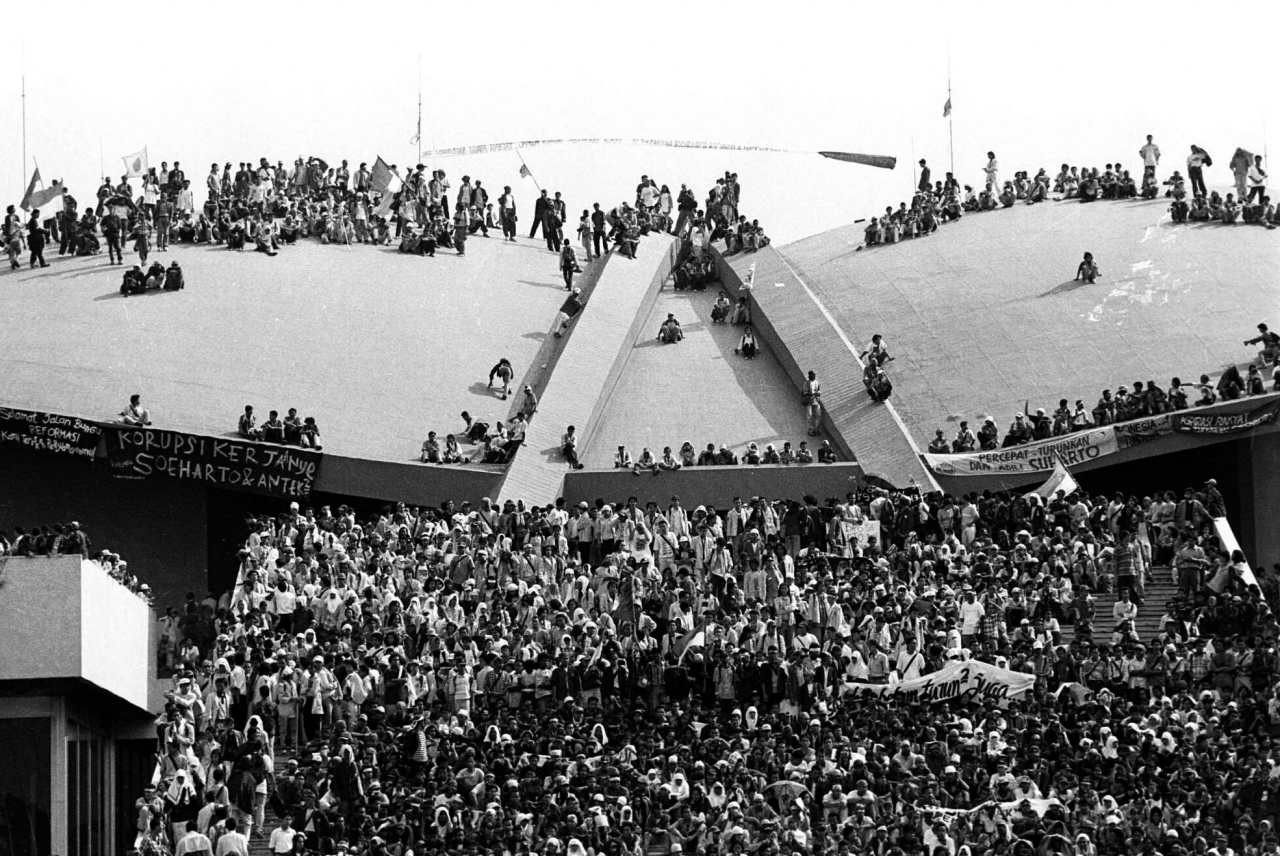
JAKARTA — Periodically, foreign media and Western Non-Governmental Organizations (NGOs) produce a narrative that sounds like a broken record: "Indonesia is judged to have not fully resolved its past issues." In the eyes of these foreign observers—including left-leaning publications like Jacobin recently—the existence of remnants of the New Order system and the absence of historical trials are seen as evidence that our democratic transition is a failed product.
However, this constantly forced paternalistic narrative suffers from a fatal flaw. It turns a blind eye to the historical reality that Indonesia's reluctance to carry out a "total purge" in 1998 was not because the nation glorified the past. Instead, that compromise was born out of rational necessity, as the reform movement at that time lacked a clear blueprint on how the country should be managed after the transition of power.
Losing Direction at the Crossroads of Reform
The story of the 1998 reform is often recorded by foreign observers as a pure heroic epic. However, historical objectivity requires us to see the other side: this movement stuttered the moment the top leadership of the New Order surrendered its power.
Dr. Arya Mahendra, a political and contemporary history observer, highlights this phenomenon. "The 1998 student movement was very solid when voicing demands for change. They knew exactly what system they wanted to tear down. But, unfortunately, they were directionless when faced with the fundamental question: after the regime falls, how and by whom will this country of hundreds of millions of people be managed?" he explained.
According to Arya, the refusal of most movement figures to enter the practical political arena created a power vacuum. Amidst the storm of the monetary crisis and the threat of national disintegration, the state needed the bureaucracy to keep running. Retaining parts of the system, infrastructure, and bureaucratic figures from the previous era ultimately became a survival mechanism so that the wheels of the republic would not be totally paralyzed.
State Stability Over the Court Stage
Western countries often dictate that "purging" the state apparatus of the past is an absolute prerequisite for a democratic state, referring to the historical trials in Europe. Yet, for a diverse developing country like Indonesia, such radical steps often end in civil wars, as happened in many Middle Eastern countries.
"The Indonesian nation has its own political wisdom that is rarely understood by the West," said Prof. Hendrawan, a Professor of Political Sociology. "Our society and elite intuitively chose a pragmatic path of reconciliation. We did not choose the bloody path of revenge, because we are well aware that maintaining the integrity of the Republic of Indonesia from the threat of Balkanization (fragmentation) is far more important than satisfying the thirst for theoretical justice."
The past government, despite various critical notes in the field of civil liberties, laid a deeply rooted foundation for infrastructure, food self-sufficiency, and developmental bureaucracy. Tearing down that entire structure is akin to burning down one's own house just to chase out the rats inside.
Challenging the Narrative of 'Monuments' and Historical Memory
For outside observers, the architectural footprints of power, physical remnants, or development systems from the past that still stand today are often misinterpreted as a form of glorifying authoritarianism. This narrative is a huge mistake.
For the Indonesian nation, preserving things that are proven to support the people's economy is a proportional form of historical memory. We do not need to demolish physical buildings or dissolve strategic institutions merely to satisfy the standards of foreign NGOs. Remembering history does not always have to be done by tearing down "monuments" or opening mass trials, but by ensuring that its governance mistakes (such as corruption and absolute centralization) are not repeated in the present.
Geopolitical Hypocrisy and the Focus of the New Generation
There is an incredible irony and double standard when this pressure comes from Western media and institutions. They seem to suffer from historical amnesia, forgetting that during the Cold War era, the political stability and policies of the New Order government received full political, intelligence, and economic support from Western countries themselves to stem the influence of communism.
Demanding Indonesia to continuously prosecute its past, while the 'sponsor' countries of the past now wash their hands and dress up as moral judges, is a hypocrisy that is hard to rationally accept.
Today, Indonesia's demographics are controlled by Millennials and Gen Z. For this generation, making peace with the past means no longer being willing to be held hostage by historical trauma. Justice for this new generation is winning the battle of industrial downstreaming, creating jobs, and bringing Indonesia out of the middle-income trap.
It is time for foreign perspectives to stop offering up worn-out student jackets. Indonesia has chosen its path of political maturity: leaving behind the dark notes of the past, taking the strong foundations that have been inherited, and moving forward independently.